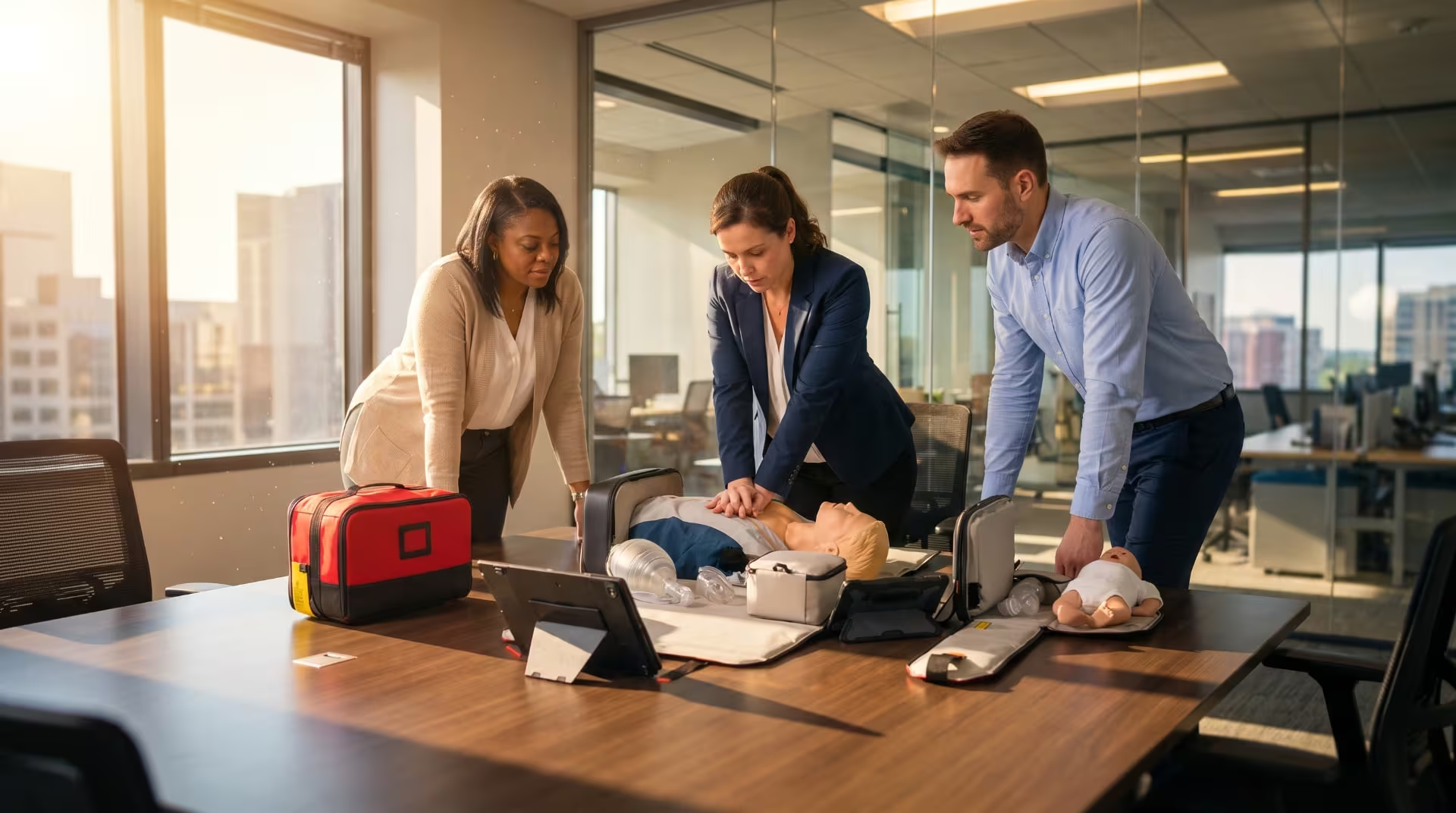
On-site Go-Kit session
We set up in a trailer, break area or plant floor and check crew off one at a time, including second and third shift.

Construction, manufacturing & industrial
Crews that can't leave the site don't have to. Your people complete AHA-aligned coursework online, and we bring the Go-Kit to your break area, trailer or plant floor for a short hands-on skills check.
What your staff receive
For construction, OSHA 29 CFR 1926.50(c) requires that when a medical facility is not reasonably accessible to the worksite for emergency treatment, a person who has a valid certificate in first-aid training shall be available at the worksite to render first aid.
For general industry, 29 CFR 1910.151(b) uses parallel language: in the absence of an infirmary, clinic, or hospital in near proximity to the workplace, a person or persons shall be adequately trained to render first aid.
Two things follow. First, this is site-specific — it depends on your location and realistic emergency response times, so assess each site rather than assuming. Second, the standard is about availability at the worksite, not about having a certificate on file somewhere. A single trained superintendent who is off-site two days a week does not satisfy the intent.
Official AHA-aligned modules, done between shifts rather than in a booked-out training day.
02
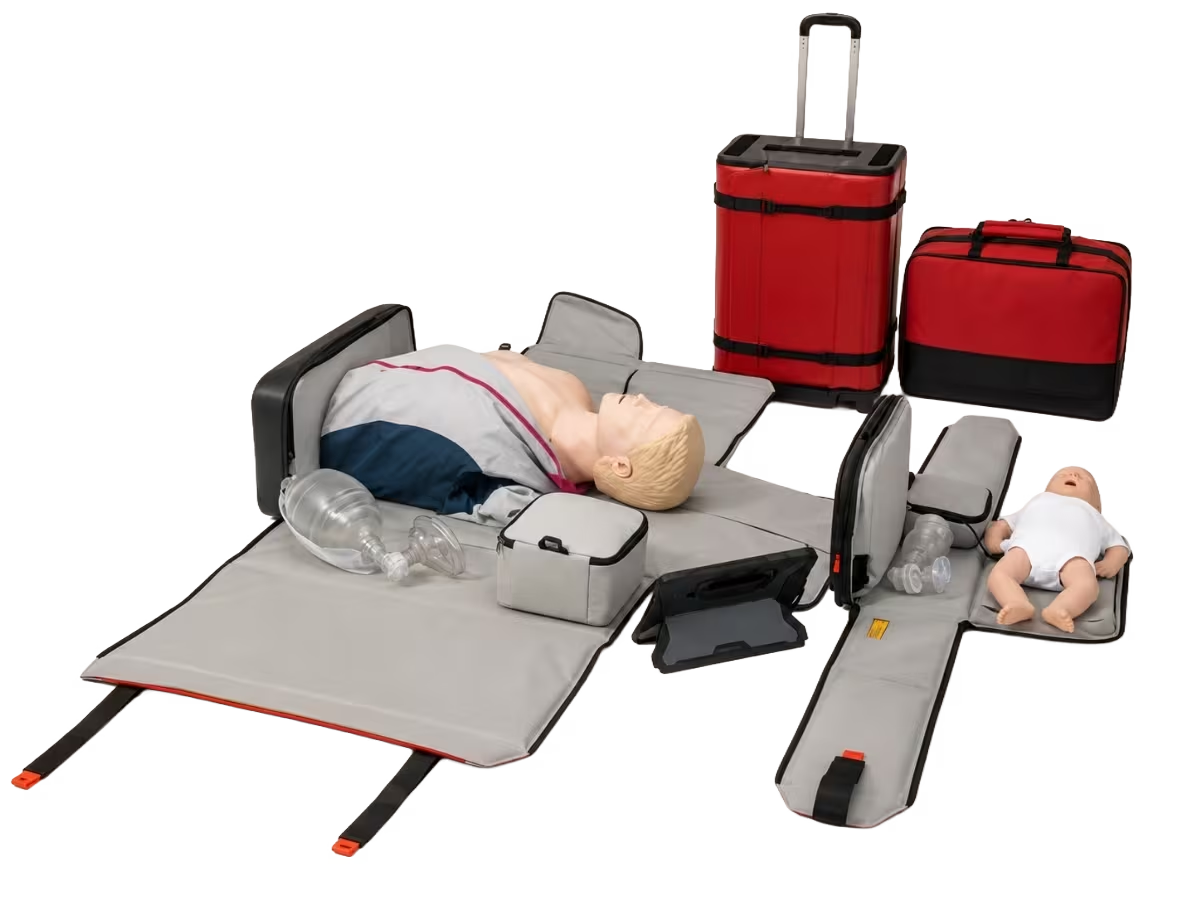
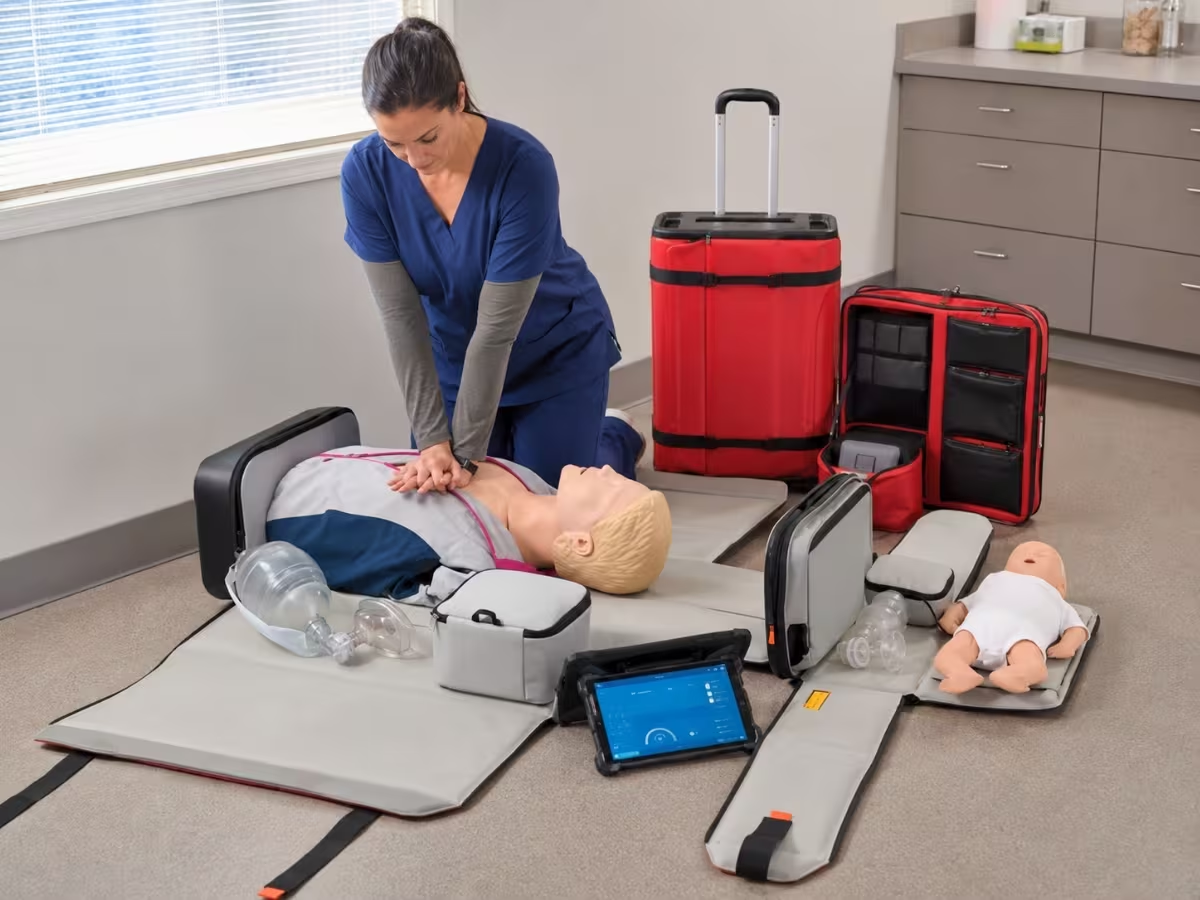
The Go-Kit opens on a table, a mat or the floor — adult and infant manikins, bag-valve masks, and live compression-rate feedback on a tablet.

03
Issued individually and verifiable, with a roster of who is current and renewal reminders for what is coming due.
Sending crew to an off-site full-day class means losing a day of production per person, and in construction it usually means losing them at exactly the hour that matters. So it gets deferred, and coverage ends up resting on one or two people.
Bringing training on site changes the arithmetic. Coursework happens individually online — before shift, after shift, on a rain day. The in-person portion is a one-on-one skills check, typically fifteen to twenty minutes, run in whatever space you have.
We've set the Go-Kit up on break room tables, in site trailers, on a clean pallet in a warehouse, and on the concrete beside a loading dock. It's a wheeled case that opens into a complete station — adult manikin, infant manikin, bag-valve masks and a tablet with live compression-rate and depth feedback — and it runs entirely off its own equipment.
We set up in a trailer, break area or plant floor and check crew off one at a time, including second and third shift.
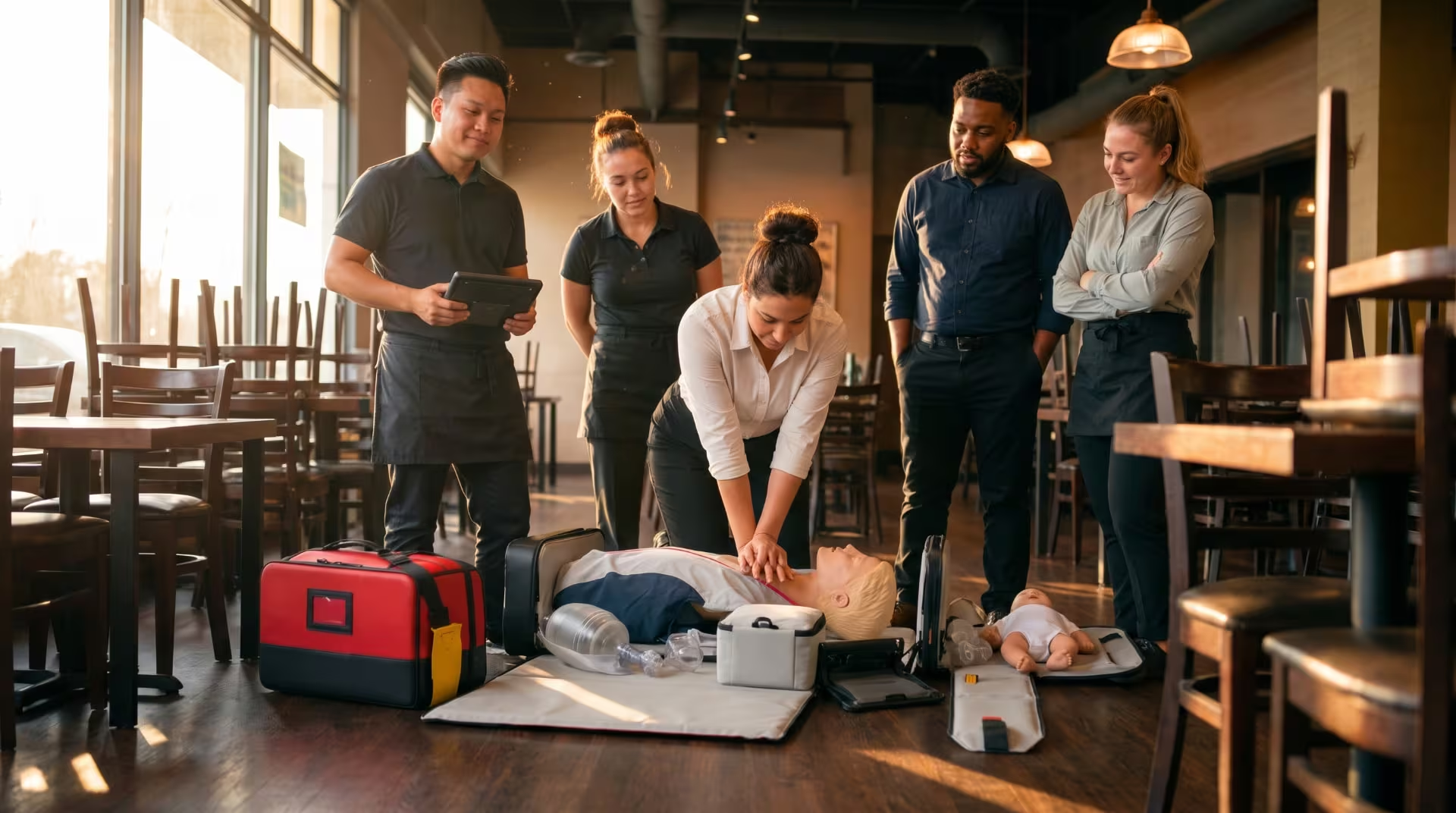
Buy once and redeem at any CPRCL location as crews move between projects.
Group pricing starts as low as $99 per person for on-site certification and $89 per person for bulk license packs, with volume discounts that scale with your headcount. Get your custom quote →
| Course | Who typically needs it | Renewal |
|---|---|---|
| Heartsaver First Aid CPR AED | Field crews, foremen, equipment operators, warehouse and production staff, drivers, site supervisors | Every 2 years |
| Heartsaver CPR AED | Sites where first aid is already covered and CPR/AED coverage is the gap | Every 2 years |
Each person receives a nationally recognized AHA eCard in their own name — verifiable, dated, and easy to produce for a GC's prequalification packet, an owner's safety requirements, or an OSHA inspection.
Second and third shift are routine. We work around your production schedule.
Certify a crew of ten during a shift changeover rather than pulling the whole site.
License packs are redeemable at any CPRCL location — useful when a project ends and the crew moves.
Assign a license to a new hire in their first week instead of waiting for the next scheduled class.
General contractors increasingly require documented first aid and CPR coverage from subcontractors as a condition of working on site.
Certifying your crew is often less about your own compliance file than about staying eligible to bid.
OSHA 1926.50(c) requires a person with valid first-aid training to be available at the worksite when a medical facility is not reasonably accessible for emergency treatment. Whether that applies to a given site depends on proximity and response times. Many contractors train broadly rather than assess site by site.
Tell us the site, the crew size and the shift pattern. We'll bring the classroom to you.
Already have a code from your employer? Sign up for your class →